Exploring Abstract Expressionism in Contemporary Art
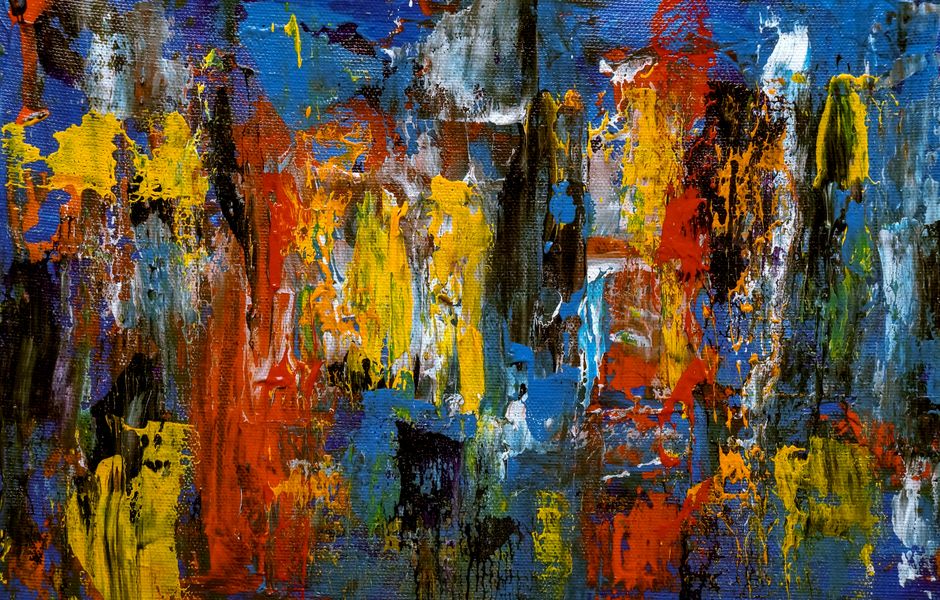
Abstract expressionism emerged in the mid-20th century as a radical departure from traditional artistic conventions. It placed a strong emphasis on spontaneous brushwork, gestural marks, and the direct expression of emotional states. This movement, often associated with the New York School, transformed the landscape of modern art by prioritizing process over predetermined composition. Artists sought to convey raw psychological experiences through non-representational forms, inviting viewers to engage with the canvas as a record of the creative act itself.
In contemporary art, the legacy of abstract expressionism continues to inform a wide range of practices. Artists today draw on its principles to explore themes of authenticity, materiality, and the relationship between the artist and the medium. The movement’s focus on intuition and improvisation resonates with those who value spontaneous creation as a means of accessing deeper emotional truths. Understanding the origins and key figures of abstract expressionism provides a foundation for appreciating its ongoing relevance in the current art world.
This article examines the historical context of abstract expressionism, the methods and philosophies of its most influential practitioners, and the ways in which its ideas are reinterpreted in contemporary artistic production. By exploring these dimensions, readers can gain a clearer perspective on how a movement born in post-war New York continues to shape artistic dialogue today.
The Historical Foundations of Abstract Expressionism
Abstract expressionism developed in the United States during the 1940s and 1950s, a period marked by significant social and political change. The aftermath of World War II created an environment in which traditional certainties were questioned, and artists sought new means of expressing the complexities of the human condition. Many were influenced by Surrealism, particularly its emphasis on automatic writing and the exploration of the subconscious. This influence encouraged a shift away from recognizable subject matter toward a more direct engagement with paint and gesture.
New York City became the epicenter of this movement, as European émigré artists brought with them ideas from Surrealism and Cubism. These cross-cultural exchanges fostered a climate of experimentation. Galleries such as the Museum of Modern Art and later the Cedar Tavern became gathering places for artists to discuss their work. The term abstract expressionism itself was first used in 1929 to describe works by Wassily Kandinsky, but it was later applied to the American movement by critics such as Clement Greenberg and Harold Rosenberg. Greenberg emphasized formal qualities, while Rosenberg focused on the act of painting as an existential event.
The movement was not monolithic; it encompassed two broad tendencies: action painting and color field painting. Action painters prioritized dynamic, gestural brushwork, while color field artists explored large areas of flat color to evoke contemplative states. Both approaches shared a commitment to abstraction and a belief that art could communicate profound emotional content without relying on narrative or representation.
Key Figures and Their Artistic Approaches
Jackson Pollock is perhaps the most iconic figure associated with abstract expressionism. His drip painting technique, developed in the late 1940s, involved laying the canvas on the floor and pouring or dripping paint from above. This method allowed Pollock to move around the canvas, engaging his entire body in the creative process. The resulting works are dense networks of interwoven lines that convey a sense of chaotic energy and rhythmic motion. Pollock’s approach emphasized spontaneity, though he often made deliberate compositional choices within the apparent disorder.
Willem de Kooning took a different path, combining abstract forms with distorted figuration, particularly in his series of women. His paintings are characterized by aggressive brushstrokes, layered paint, and a vigorous interplay between figure and ground. De Kooning’s work demonstrates that abstract expressionism could incorporate elements of the human figure while still prioritizing emotional intensity and painterly freedom. His process involved constant revision and reworking, revealing a tension between control and accident.
Mark Rothko represented the color field tendency. He created large-scale canvases with soft-edged rectangles of color that seem to float and pulse. Rothko intended his paintings to evoke deep emotional responses, ranging from joy to tragedy. He carefully layered thin washes of paint to achieve luminosity and depth. Unlike the explosive energy of action painting, Rothko’s works invite prolonged, quiet contemplation. His philosophical approach to art as a transcendent experience influenced generations of artists.
Other significant contributors include Barnett Newman, whose vertical “zips” divide fields of color, and Helen Frankenthaler, who developed the soak-stain technique that blurred the line between drawing and painting. Each artist brought a distinct voice to the movement, but they shared a belief in the power of abstraction to convey authentic human feeling.
Techniques and Processes in Abstract Expressionism
The techniques of abstract expressionism are integral to its identity. Spontaneous brushwork, also known as gesture, is central to action painting. Artists applied paint with broad, sweeping motions, using brushes, knives, or even their hands. The physical act of painting became a performance, with the canvas serving as a record of the artist’s movements. This emphasis on process over product challenged traditional notions of craftsmanship and finish.
Another key process is the use of unconventional tools and materials. Pollock used sticks, trowels, and hardened brushes to drip paint. De Kooning often mixed paint with sand or other additives to create texture. Frankenthaler poured thinned paint onto unprimed canvas, allowing it to soak and bleed, creating stains that were both transparent and luminous. These experiments expanded the possibilities of paint application, making the material itself a subject of art.
Color field painters employed different methods, such as staining, brushing, and layering. Rothko built up multiple translucent layers to achieve a glowing effect. Newman used a palette knife to apply paint in smooth, even surfaces, interrupted only by the sharp vertical lines. The goal was to create fields of color that would envelop the viewer, inducing a meditative state. The scale of the works also played a role; canvases were often large enough to fill the viewer’s field of vision.
These techniques were not ends in themselves but vehicles for expressing the artist’s inner state. The unpredictable nature of the materials—how paint drips, spreads, or dries—was embraced as part of the creative dialogue. Abstract expressionists believed that by relinquishing some control, they could access more authentic, subconscious dimensions of expression.
The Influence of Abstract Expressionism on Contemporary Art
Abstract expressionism has left a lasting mark on contemporary art, influencing diverse movements such as Neo-Expressionism, Lyrical Abstraction, and Process Art. In the late 1970s and 1980s, artists like Julian Schnabel and Anselm Kiefer revived gestural painting on a grand scale, incorporating unconventional materials and historical references. Their works echo the emotional intensity and scale of abstract expressionism while engaging with postmodern concerns.
In the realm of installation and performance, the emphasis on process and the artist’s body has persisted. Performance artists like Carolee Schneemann drew on the physicality of action painting. Contemporary abstract painters such as Julie Mehretu and Cecily Brown create layered, dynamic compositions that reference the energy of Pollock and de Kooning but integrate digital influences, cultural narratives, and complex mark-making. Their work demonstrates that abstract expressionism’s methods can be adapted to address contemporary issues such as globalization, identity, and technology.
Institutions dedicated to art education and exhibition, such as Art Spectrum, provide a platform for exploring these connections. By examining historical works alongside contemporary responses, curators and educators help audiences understand how abstract expressionism’s core principles—spontaneity, emotional depth, and material exploration—continue to resonate. The movement’s legacy is also evident in the continued appeal of large-scale abstract painting in galleries and museums.
It is important to note that contemporary artists do not simply copy abstract expressionist styles. They reinterpret its ideas through a contemporary lens, often combining abstraction with figuration, text, or digital media. The dialogue between past and present enriches the understanding of both the original movement and its current manifestations.
Contemporary Interpretations and Ongoing Relevance
Today, many artists engage with abstract expressionism by re-examining its underlying philosophies. Some focus on the psychological and spiritual dimensions, exploring themes of trauma, memory, and the sublime. Others challenge the movement’s historical canon by highlighting previously marginalized voices, such as female artists and artists of color who contributed to abstract expressionism but received less recognition. For example, artists like Lee Krasner and Joan Mitchell were integral to the movement, and their work is now being reassessed. Contemporary artists often position their practice in relation to these overlooked figures.
The digital age has also influenced how spontaneous mark-making is approached. While traditional canvas remains common, artists experiment with digital painting, where the gesture is simulated through styluses and software. This raises questions about authenticity and presence—central concerns of abstract expressionism. Artists are exploring how digital tools can facilitate new forms of intuitive creation, even as the physicality of paint is lost.
Abstract expressionism’s emphasis on the individual’s emotional experience has found resonance in a world where personal expression is increasingly valued. However, contemporary practice often situates the artist within a broader social context, acknowledging that personal expression is shaped by cultural and political forces. This nuanced approach does not detract from the movement’s impact; rather, it demonstrates the adaptability of its core ideas.
As the art world continues to evolve, abstract expressionism remains a touchstone for conversations about artistic freedom, the role of intuition, and the relationship between maker and material. Its origins and key figures offer a rich starting point for understanding how art can function as a direct conduit for human experience. Whether through the vibrant canvases of contemporary painters or the critical reexaminations of art historians, the spirit of abstract expressionism endures.